

Fire Ants in Your Yard? Here’s What to Know

Seeing random dirt mounds popping up across your yard? You may already have a growing fire ant problem.
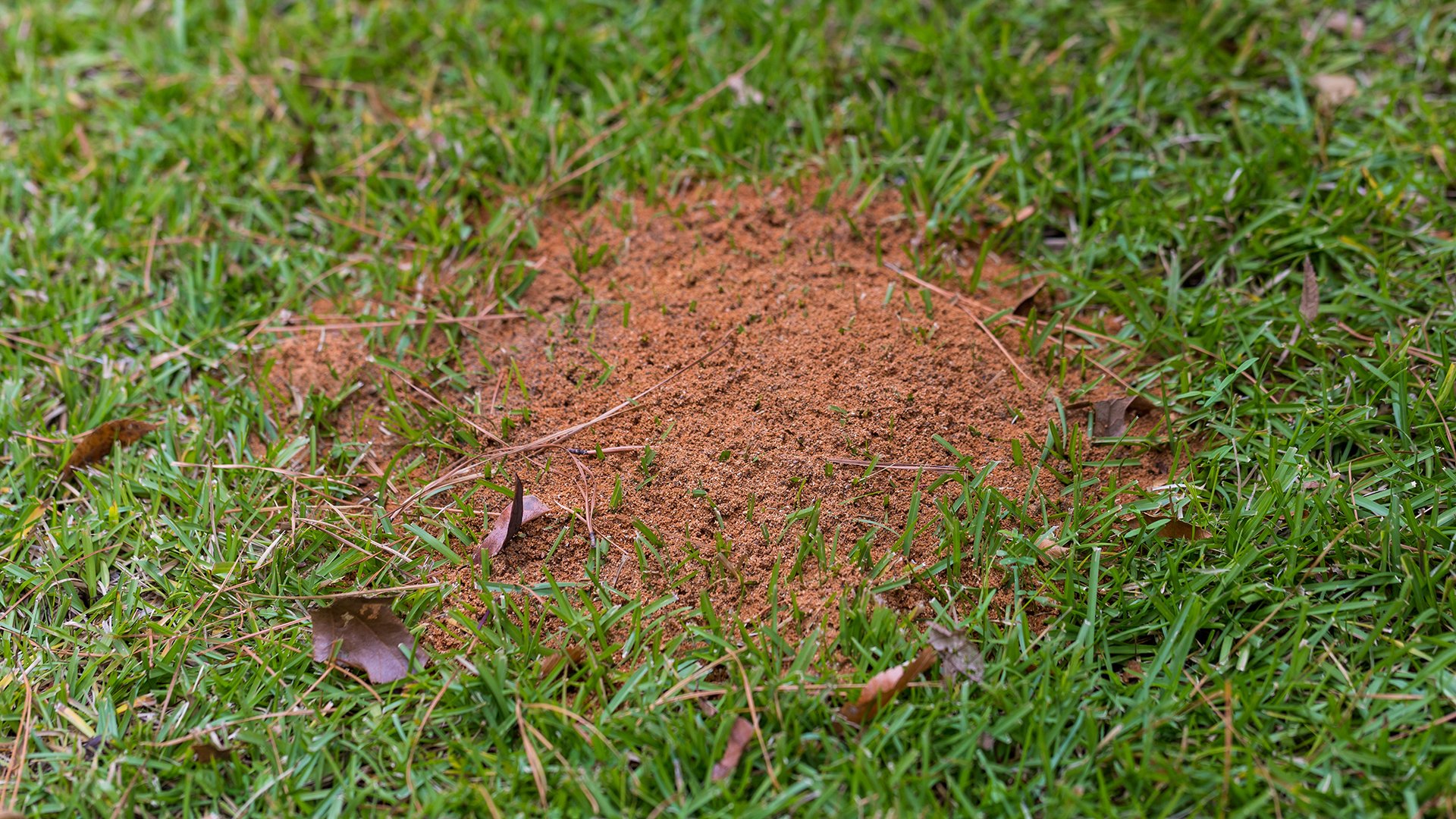
Fire Ant mound in a backyard.
What Are Fire Ants?
If you’re noticing small dirt mounds in your yard and aggressive ants when disturbed, you may be dealing with fire ants. They’re common in this region and can quickly become a problem if left unaddressed.
Fire ants are typically reddish-brown in color and vary in size, usually between 1/8 and 1/4 inch long. Within a single colony, you may see ants of different sizes, which is a key identifying trait. They have a darker abdomen and a noticeable stinger at the rear.
Why They’re a Problem
Fire ants are known for their painful stings and aggressive behavior. When their nest is disturbed, they don’t just bite—they swarm. This can be especially concerning for homes with children or pets.
Where You’ll Find Them
Fire ants typically build mounds in open areas like:
Lawns
Along sidewalks
Near driveways
Their nests often lack a visible opening, making them easy to step on without realizing it.
Why Fire Ants Are Hard to Eliminate
One of the biggest challenges with fire ants is how easily they spread. What looks like a single mound can actually be part of a much larger colony underground. Treating only what you see on the surface often does not address the full problem and may even cause the colony to move and reestablish nearby.
How Effective Treatment Works
Long-term control focuses on eliminating the entire colony, including the queen. This is usually done through targeted baiting systems that ants carry back into the nest, allowing the treatment to reach deeper than surface-level methods.
When to Take Action
If you’re seeing multiple mounds or recurring activity, it’s a sign the problem is growing. Addressing it early helps prevent spread and reduces the risk of stings around your home.
